
Using AI to Translate German Church Records (and more) into English
Geoff Rasmussen, Andrea Bentschneider
Content

Introduction
42s
Transkribus
1m 12s
Google Translate
1m 16s
ChatGPT
1m 16s
Comparisons
1m 52s
Human Translation
2m 10s
Andrea's thoughts
6m 34s
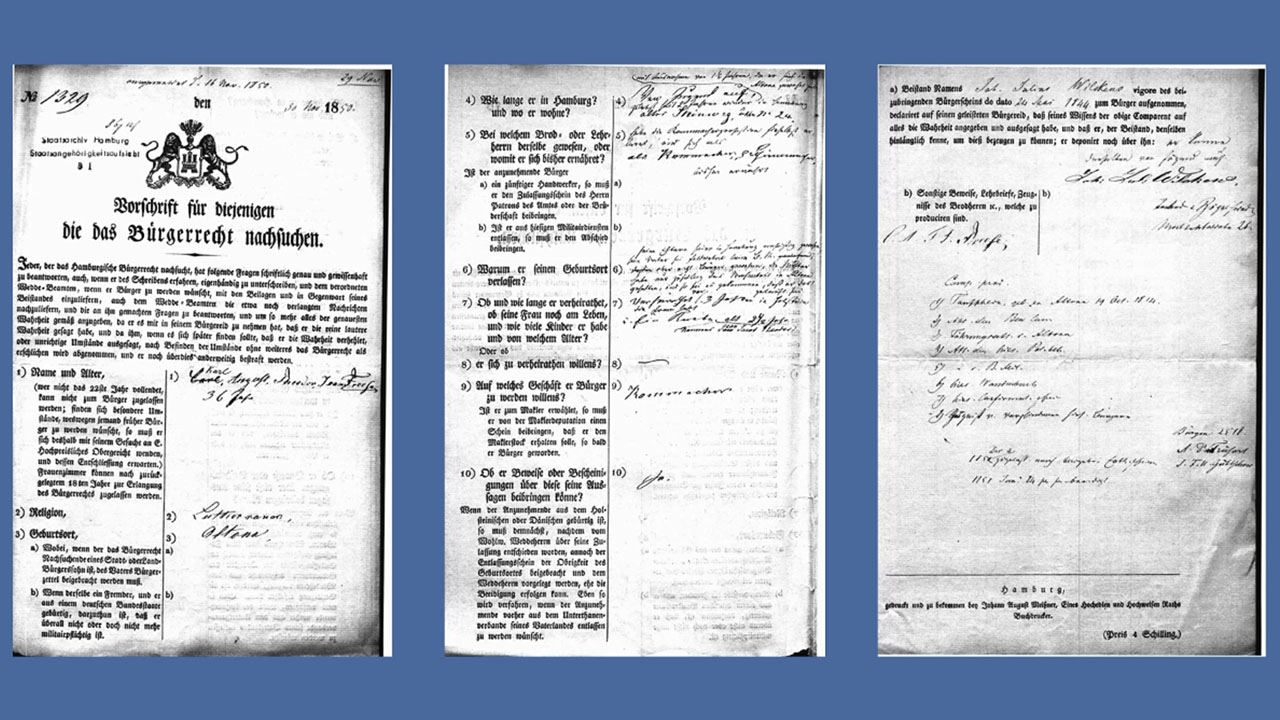
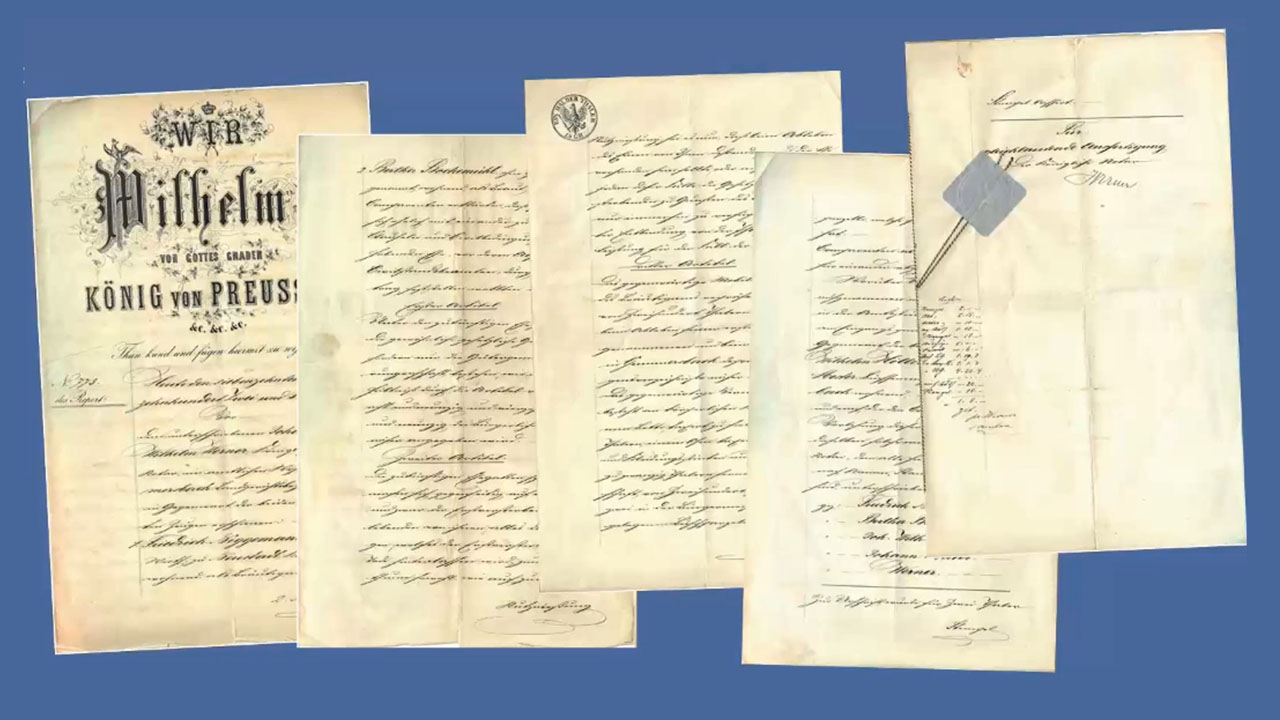
The emigration File
7m 2s
About this webinar
Learn how to use Transkribus, ChatGPT and other AI tools to translate German church records, and other records, into English. Learn about cautions and practical uses.
About the speakers

Geoffrey D. Rasmussen is the father of four budding genealogists. He graduated with a degree in Genealogy and Family History from Brigham Young University and has served as director and vice-president...
Learn more...
Andrea Bentschneider, based in Hamburg, Germany, is renowned for her expertise and contributions to the field of genealogy. Since establishing “Beyond History” in 2004, she has emerged as Germany’s fo...
Learn more...Key points and insights
This Webinar Short explores the use of artificial intelligence (AI) to aid in the challenging task of translating German church records and other genealogical documents into English. It demonstrates how AI tools can assist genealogists in deciphering old German script and provides a comparative analysis of different AI translation methods. While highlighting the potential of AI to streamline research, the webinar also emphasizes the importance of human verification for accuracy, especially with nuances in language and historical context.
- The webinar showcases the capabilities of AI tools like Transkribus and ChatGPT in transcribing and translating German text, significantly reducing the time and effort required to decipher complex documents. It provides a step-by-step demonstration of how to use these tools to convert handwritten German script into readable English, making previously inaccessible records understandable.
- A key takeaway is the comparison of different translation outputs, revealing that while AI can provide a strong foundation, it often misses crucial details and nuances. The webinar emphasizes that relying solely on AI translations can lead to inaccuracies, particularly with historical terms, regional variations, and subtle differences in word meanings.
- The discussion underscores the indispensable role of human expertise in genealogical research, even in the age of AI. It highlights the necessity of verifying AI-generated translations with knowledgeable individuals, such as native German speakers or experienced genealogists, to ensure accuracy and capture the full context of historical documents.
Related webinars
 01:33:02
 00:50:05
 00:07:37
 00:13:19
Comments (22)
Transkribus will definitely help with my tougher records, those with less typical wordings. Thanks! In years past, I fed Tranlate output back as input in the other direction. Where it fails shows the areas where "nuance lossage" and "language aging" that Andrea mentioned, and also idioms, translational inexactitudes, and more are a problem. Feeding it backward allows you some freedom in carefully tweeking or massaging the inputs/outputs. Nice presentation.
I've used Transkribus and then DeepL. It is still amazing!
I wonder how Claude.ai would handle the transcript? It's a game changer for English documents, so it would be interesting to see for German.
I have been using Transkribus to translate personal letters in German for a few weeks now, and I found very quickly that the results were much better if I paid to use the Super Model. I use Deepl to translate and the results are better if you edit the transcription so it doesn't treat each line separately. It's not perfect but the human alternative is not affordable and so it's much better than never finding out what is in those letters.
When I finish this project I will transcribe my grandmother's letters to my mother, another of those tasks I thought I'd never have time for.
Fascinating Geoff. AI is developing so quickly that I am rarely surprised by what it can do now… but quite honestly, I did not expect this!
I have a few Latin documents that I have attempted to translate but have not gotten very far. I think I'll try your suggestion and see where it takes me. Thank you.
Did you also obtain the emigration papers for Catharina Kienz, Archiv B731/1 Nr. 902
http://www.landesarchiv-bw.de/plink/?f=5-2237644
Not yet, but she's on my list. :)
I found this webinar fascinating and halfway through the proverbial light went on! I have a trove of about 20 letters sent to my great-grandfather that I have been "meaning to translate" for over 40 years. They are written in German script which is getting harder and harder for me to decipher over the years. I grabbed a four-page sample written (I suspected) by his sister in 1898. It took a bit to get it through Transkribus but I succeeded on my fourth try. Then I sent the output to ChatGPT and, oula, there was the letter in English from a neighbor of Louis's sister who was very ill. Thank you so much for this webinar.
Wow, how wonderful!!
Many people who translate on a regular basis believe that DeepL does a better job of translating that Google Translate, particularly if it's a longer document.